
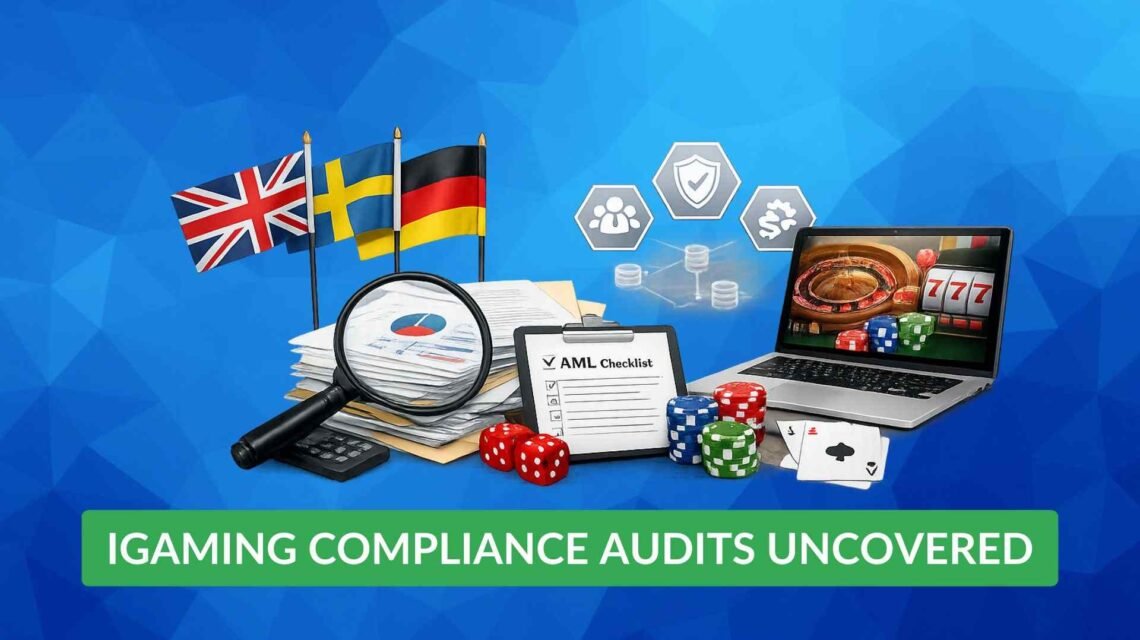
iGaming compliance audits are becoming far more difficult for multi-market operators to navigate. What passes as acceptable documentation in one jurisdiction may fail under scrutiny in another. A responsible gambling escalation reviewed in Malta may require a different evidence trail in the UK. Affiliate oversight standards differ across European markets and AML expectations continue to evolve market by market.
Most operators do not struggle because they lack policies but rather because fragmented systems make it difficult to prove how decisions were actually made. As operators expand across frameworks governed by the UK Gambling Commission, Spelinspektionen, and Germany’s Gemeinsame Glücksspielbehörde der Länder, operational consistency becomes … harder to maintain. Teams scale quickly while regional workflows diverge and evidence might get buried across Slack threads, spreadsheets, internal tickets, and disconnected compliance systems.
The operational risk is no longer simply whether a process exists but whether operators can reconstruct it and defend decisions months later under regulatory scrutiny. For many platforms, that is becoming the real pressure point behind modern iGaming compliance audits.
Why iGaming Compliance Audits Are Becoming Harder Across Multiple Markets
Regulatory fragmentation is creating operational strain across the industry … The pressure starts once platforms expand across multiple markets. What satisfies the UK Gambling Commission may not satisfy the Spelinspektionen or Germany’s Gemeinsame Glücksspielbehörde der Länder. Documentation standards shift. Escalation expectations differ. Even simple customer interactions can require different evidence trails depending on the jurisdiction.
A retention decision cleared internally in one market can become a problem somewhere else six months later. Some regulators expect detailed affordability evidence tied to player interactions. Others focus heavily on AML triggers, transaction monitoring, or supplier accountability. With multiple compliance teams, differing (regional) workflows, and ever-evolving regulatory requirements, consistency can start breaking down fast.
That is where operational drift starts creeping in. Over time, teams start solving the same problem in completely different ways. One market documents every escalation properly, while another might rely on internal chats and fragmented notes that become almost impossible to reconstruct later.
None of this necessarily looks problematic during normal operations, and yet it becomes problematic during iGaming compliance audits.
Because audits do not simply assess whether decisions were made … they assess whether decisions can be proven consistently, and defensibly.
That pressure is increasing across regulated industries. The European Commission continues expanding governance and accountability expectations tied to operational oversight and reporting standards.¹ For multi-market operators, fragmented documentation is becoming increasingly difficult to defend.
Decisions That Create Problems During iGaming Compliance Audits
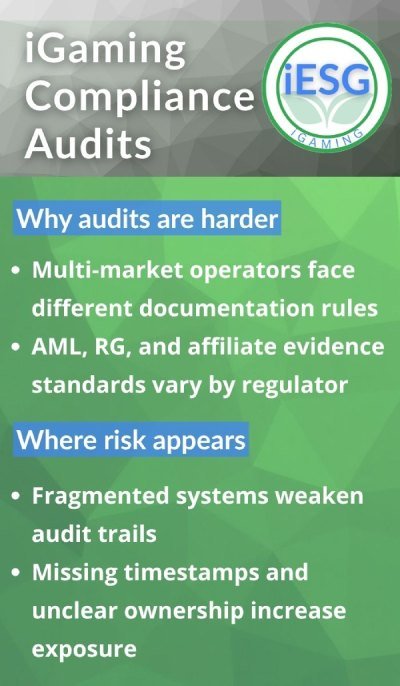
Regulators rarely focus on polished policies during investigations … they focus on operational evidence.
Can the operator demonstrate what happened, who reviewed it, and why the decision was made?
Responsible gambling controls
They remain one of the clearest examples. Operators may have intervention frameworks in place, but gaps often appear inside the documentation itself. Missing timestamps, undocumented overrides, unclear escalation ownership, or inconsistent retention notes create exposure quickly when regulators request historical evidence.
The UK Gambling Commission has repeatedly highlighted failures around customer interaction documentation and escalation processes during enforcement actions.²
AML workflows
Can create similar “pressure”: Multi-market platforms process huge volumes of transactional reviews, account monitoring activity, and source-of-funds checks across different regulatory environments. Without centralized evidence trails, reconstructing decisions becomes difficult once investigations begin.
Affiliate oversight
This is another area where weak audit trails get exposed quickly: A surprising number of operators still manage affiliate approvals through spreadsheets, inboxes, Slack messages, and scattered compliance notes. That works until someone asks for historical evidence tied to traffic quality concerns, onboarding decisions, or ignored compliance warnings. Then teams start digging through disconnected systems trying to piece the story together afterwards.
The same pattern appears across supplier oversight, customer complaints, operational risk decisions, and internal escalation procedures.
Most failures during iGaming compliance audits are not caused by the absence of activity … they are caused by the inability to prove consistency.
Fragmented Systems Are Weakening Operator Controls
The operational reality inside many platforms still depends heavily on disconnected systems. Approvals happen in Slack and escalations sit inside regional spreadsheets. Historical decisions are buried in ticketing systems that only certain teams can access. Different teams often store evidence differently, which becomes a serious problem once reviews start. Internal ownership also changes over time, making historical accountability even harder to track.
That structure may work operationally for months or even years without obvious issues.
The real pressure arrives when someone asks operators to rewind the tape: A regulator wants a full timeline tied to a VIP decision, an investor requests evidence connected to supplier oversight during due diligence or a compliance review asks who approved a responsible gambling escalation and whether the process was followed consistently across markets.
That is usually where fragmented systems start showing cracks. Teams spend days reconstructing decisions manually and different departments may produce even conflicting records. Escalation histories become incomplete abd then ownership accountability becomes difficult to trace.
In many cases, operators are not failing because controls do not exist … they are failing because operational evidence cannot be consolidated quickly or consistently enough to withstand pressure, which creates commercial consequences beyond regulation alone.
According to PwC, governance transparency and operational accountability are playing an increasingly important role during investor risk assessments and due diligence reviews across regulated sectors.³
Weak documentation slows investigations, complicates acquisitions, increases enforcement exposure, and creates operational inefficiency at scale. Fragmentation is no longer just a workflow problem … it is becoming a business risk.
💡iGaming compliance audits rarely expose one major failure. More often, problems build quietly through fragmented systems, inconsistent documentation, weak escalation tracking, and poor operational oversight across markets. Our iESG Assessment helps operators identify audit trail gaps, control weaknesses, and reporting risks before they become larger regulatory or commercial problems.
What Strong iGaming Controls Actually Look Like
The strongest operators are moving away from reactive documentation and toward centralized operational evidence. Not because regulators suddenly expect perfection, but because fragmented systems become unsustainable as platforms expand across markets.
Strong controls are usually built around consistency which means standardized escalation pathways, centralized evidence retention, timestamped approvals, clear ownership structures, and documentation systems capable of reconstructing decisions quickly under scrutiny.
Importantly, the objective is not to create more bureaucracy but to reduce ambiguity.
Well-structured audit trails allow operators to respond faster during investigations, reduce internal confusion across markets, and maintain clearer accountability when multiple teams interact across jurisdictions. The operational difference becomes noticeable very quickly.
Operators with stronger controls are not scrambling to rebuild timelines during reviews. The evidence is already there and decisions are documented properly, escalation paths are clear, and teams are not wasting days chasing screenshots, Slack messages, or conflicting records across departments.
That operational clarity becomes increasingly valuable as regulatory pressure grows across Europe and other licensed markets.
Because during serious iGaming compliance audits, confidence is rarely enough … operators need evidence.
Conclusion
Multi-market expansion is making operational consistency harder to maintain across iGaming.
Different jurisdictions apply different expectations around documentation, escalation procedures, responsible gambling controls, and supplier oversight. As those pressures increase, fragmented systems are exposing weaknesses that many operators previously overlooked.
The businesses under the most pressure during iGaming compliance audits are not always the ones lacking policies.
They are often the ones unable to prove how operational decisions were reviewed, escalated, and enforced across markets.
That is why stronger audit trails are becoming far more than a compliance exercise … they are becoming operational infrastructure.
FAQ: iGaming compliance audits
Why are iGaming compliance audits becoming more complex?
Operators expanding across multiple markets face different documentation rules, AML expectations, and responsible gambling standards depending on the regulator involved.
What do regulators look for during iGaming compliance audits?
Most regulators want to see whether operators can prove how decisions were handled, who approved them, and whether escalation procedures were actually followed.
Why do multi-market operators face higher audit risk?
Because every market applies slightly different rules. Over time, that creates disconnected workflows, inconsistent documentation, and operational gaps between teams.
Which operational areas create the biggest audit exposure?
Responsible gambling controls, AML reviews, affiliate oversight, supplier approvals, and customer interaction records are common pressure areas.
Why are iGaming compliance audits trails important?
Strong audit trails help operators defend operational decisions during investigations, enforcement reviews, and investor due diligence.
Sources:
- European Commission: “Corporate Sustainability Reporting”
https://finance.ec.europa.eu/capital-markets-union-and-financial-markets/company-reporting-and-auditing/company-reporting/corporate-sustainability-reporting_en - UK Gambling Commission: “All Regulatory Actions”
https://www.gamblingcommission.gov.uk/public-register/regulatory-actions/full - PwC: “Global Enterprise Risk and Controls”
https://www.pwc.com/gx/en/services/risk/enterprise-risk-and-controls.html
