
Much of the ESG conversation still circles around energy efficiency, carbon offsets, and the compliance paperwork that comes with them. All necessary, but far from the full picture.
The “S” in ESG, social impact in iGaming, is where values meet people. It is about how operators treat players, staff, and the communities around them. Right now, too many operators see it as optional. Ignoring the social side is especially risky in the iGaming sphere … especially as regulations are getting tighter and tighter.
Social impact in iGaming is not about … quick PR wins or some one-off charity stories. It is a business lever. It shapes trust, loyalty, and long-term survival. In the sections ahead, we look at what it means for iGaming, why it matters for business, and which operators are setting the pace.
What Social Impact in iGaming Really Means
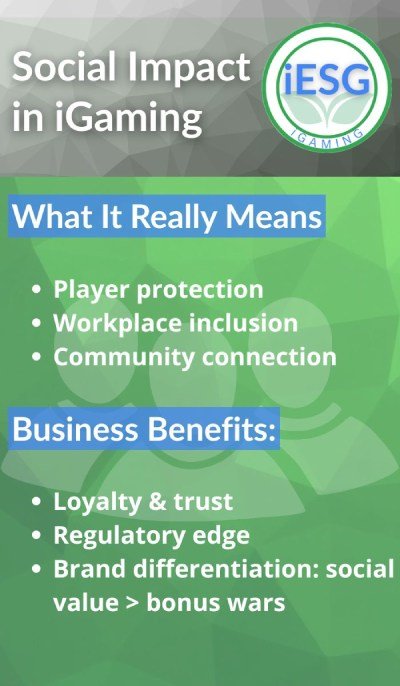
Social impact is best understood as a set of responsibilities that reveal how operators influence people both within and beyond their platforms. Particularly in gambling, three pillars stand out in the social impact in iGaming context:
- Protecting players
Not surprisingly, player protection forms the foundation. This goes beyond self-exclusion buttons or “gamble responsibly” banners. Affordability checks, deposit limits, and real-time monitoring are increasingly seen as safeguards that prevent harm … before it happens. Regulators such as the UKGC and KSA are now pushing these rules into the heart of licensing conditions.1 Operators that move early on these safeguards do more than tick a compliance box. They help set the standard for a safer market and strenghten their reputation as safe platforms.
- Diversity and inclusion
Workplace culture is another dimension of social impact in iGaming. Diversity and inclusion are no longer peripheral issues. Diverse teams tend to make sharper decisions and connect more naturally with broad audiences. Clear steps like pay transparency, equal career progression, and visible representation in leadership show that commitment is real, not rhetorical. Betsson has put diversity at the heart of its culture, framing it not only as the right thing to do but also as a driver of innovation and commercial success.
- Community connection
The other side of social impact in iGaming is the connection to communities. Gambling operators leave a mark that extends beyond their player base. So, what can be done to “give back”? Think about local projects, ecological initiatives, and educational or social initiatives as well as sustainable sponsorships in iGaming. All of these make values visible. Flutter, for example, has backed grassroots programs in the UK and Ireland that focus on mental health support. Commitments like these show how profits can be reinvested into social outcomes. The return? Building credibility, especially in markets where public trust in gambling is … not the highest.
Taken together, these pillars form the basis on which social impact in iGaming’s and responsibility is judged. ESG reporting requirements such as the CSRD are making them harder to ignore, but the leaders are the ones who frame social impact as opportunity rather than compliance.
🏅The iESG Certificate ties these three pillars together. It provides independent, industry-specific verification that an operator’s commitments to player protection, workplace inclusion, and community engagement aren’t just words, they’re measurable actions.
For operators, the first step toward certification begins with the iESG self-assessment, which highlights strengths and uncovers gaps in social impact practices.
Why Social Impact in iGaming Builds Loyalty
Loyalty in gambling is … fragile. Players face almost no switching costs. Even the most loyal VIPs have more than one platform and many regulars chase massive welcome bonus after welcome bonus. The harsh reality: players can move from one operator to another in seconds. That is why the “S” in ESG is not about charity. Especially younger demographics … think about the value-driven Gen Z, who increasingly expect brands to be transparent and responsible. Social impact is also about retention – find more info on player engagement tactics here.
Trust as currency
A platform that takes responsible gambling seriously is more likely to keep players long term because they feel safe, valued, and respected.
Behavioral economics in play
Safer gambling features like deposit limits and play reminders may appear restrictive, but they build trust over time. Players tend to stick with platforms that show fairness. Sharing real numbers on problem gambling or usage of safer play tools can turn accountability into an advantage rather than a weakness.
Community as differentiator
In saturated markets, operators compete on bonuses and odds. But that is a race to the bottom. Social initiatives also strengthen the emotional bond between players and platforms. When gamblers see their operator funding local projects or supporting education in their community, the industry looks less like it is only extracting value and more like it is giving something back.
Retention and regulation
Regulators also tend to look more favorably on companies that invest seriously in player protection and social value, making it easier for those operators to expand into new markets.
In short, social impact in iGaming is the layer of ESG that keeps players coming back. It builds that kind of emotional trust that marketing campaigns alone cannot buy.
💡 This is exactly where iESG Membership adds value. It gives operators ongoing access to resources, visibility, and recognition that reinforce their social commitments, while also facilitating real-world projects in communities, education, or sustainability. That way, social impact isn’t just a promise on paper; it’s action players, regulators, and investors can see. And that action builds the kind of loyalty and trust that marketing campaigns alone cannot buy.
Social Impact in iGaming Case Studies: Operators Raising the Bar
A few operators have started treating the “S” in ESG as more than a footnote:
- Kindred Group has set a goal to reach zero revenue from harmful gambling and reports openly on its progress⁴.
- Flutter Entertainment rolled out its Positive Impact Plan, linking safer gambling and workplace inclusion to clear targets⁵.
- Betsson Group backs local community projects while pushing diversity across its global offices⁶.
These are not just feel-good stories. They show that social initiatives can scale, create measurable outcomes, and strengthen a brand’s license to operate.
How Do Operators Build Real Social Impact in iGaming Strategies?
For operators ready to give the “S” the same prominent weight as “E” and “G,” four practical steps stand out:
Strengthen responsible gambling
Go further than the minimum requirements. By using latest technology, risky play is detected early, before it spins totally out of control. Extra plus points in building a great reputation and strengthen retention are publishing harm-reduction data openly.
Turn diversity into targets
Set representation goals for leadership, monitor progress, and communicate results transparently. The return of this “investment” comes in form of a boosted positive industry perception.
Invest in local impact
Channel funds into education and mental health projects, especially in the core markets, and track the results so they go beyond sponsorship logos. Real impact brings a real boost in brand reputation in return.
Report with substance
Align with CSRD and GRI standards, but focus less on how much was spent and more on the change achieved. The return of investment comes back, long-term. Players will stick around longer and new regulations won’t come as a massive obstalce
When done this way, social impact in iGaming stops being a compliance exercise and becomes part of an operator’s identity.
Conclusion: Social Impact in iGaming
iGaming cannot afford to treat social responsibility as an optional add-on. Regulators are setting harder rules. Players are demanding more. And, the operators who only talk about emissions and governance are missing the story.
The future of ESG in iGaming will not be defined by carbon metrics alone. It will be defined bythe social impact in iGaming and how operators treat people. Those who put the “S” at the center today will set the industry standard tomorrow. Ready to lead the future, sustainable and long-term profitable?
FAQ – Social Impact in iGaming
What does social impact in iGaming mean?
It covers how operators affect players, employees, and communities, from responsible gambling to inclusion and local projects.
Why is the “S” in ESG important for iGaming?
Because it shapes player trust, loyalty, and compliance with growing regulations.
How can social impact in iGaming help retention?
By making players feel protected and valued, not just monetized.
Which operators are ahead in social ESG?
Kindred Group, Flutter Entertainment, and Betsson are often cited leaders.
How does diversity tie into iGaming’s ESG strategy?
It ensures fair pay, representation, and stronger decision-making across the business.
Are regulators demanding social reporting in gambling?
From UKGC licensing rules to the EU’s CSRD, social metrics are increasingly mandatory.
Sources:
- UK Gambling Commission: “Licensing Conditions”
https://www.gamblingcommission.gov.uk/about-us/freedomofinformation/print/compliance-assessments - European Commission: “CSRD”
https://finance.ec.europa.eu/capital-markets-union-and-financial-markets/company-reporting-and-auditing/company-reporting/corporate-sustainability-reporting_en - Deloitte: “2025 Gen Z & Millennial Survey”
https://www.deloitte.com/global/en/issues/work/genz-millennial-survey.html - Kindred Group: “Sustainability Report”
https://www.fdjunited.com/wp-content/uploads/2025/02/kindredsusrepsupp-grinotes2023.pdf - Flutter Entertainment: “Positive Impact Plan”
https://www.flutter.com/sustainability/ - Betsson Group: “Sustainability”
https://www.betssongroup.com/ungc/
