

Gambling social responsibility is a term that’s gaining traction in the iGaming industry. But what does it actually mean, and how does it differ from responsible gambling? Despite its growing relevance, the concept still feels vague or even undefined to some extent. It represents the social pillar of ESG in iGaming, complementing environmental sustainability and governance frameworks.
For some, gambling social responsibility is just another compliance headache. For others, it’s a term frequently used in corporate communications but often poorly defined in practice. But in reality, it’s neither. True social responsibility in gambling is about keeping the industry sustainable … not just in terms of regulation, but in how it protects players and builds long-term trust. The best operators don’t see responsible gambling as an obligation … they treat it as a competitive edge.
More than just a regulatory requirement, gambling social responsibility plays a critical role in the broader ESG (Environmental, Social, and Governance) strategy for iGaming. Social sustainability is at the core of responsible gambling efforts, ensuring that player protection, fairness, and ethical marketing contribute to a more sustainable industry.
Understanding gambling social responsibility helps operators move beyond basic compliance toward long-term industry sustainability.
What is Gambling Social Responsibility?
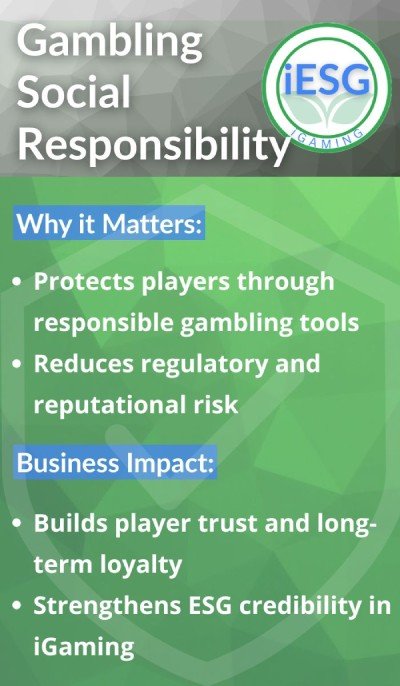
For years, responsible gambling has been positioned as a regulatory must-have, something operators are expected to do to stay licensed. But there is more to it than “just” that. Modern social responsibility in gambling extends beyond regulatory compliance and focuses on creating a safe and transparent entertainment environment for players.
Gambling social responsibility is also a core pillar of ESG in iGaming. While the “G” in ESG often dominates the conversation with governance initiatives, the “S” — social sustainability — is just as critical. Responsible gambling isn’t just about compliance; it’s about creating a fair and transparent industry where players feel protected, informed, and in control. Modern social responsibility in gambling extends beyond regulatory compliance and focuses on creating a safe and transparent entertainment environment for players.
Strong player protection in iGaming frameworks combine behavioral monitoring, deposit limits, and self-exclusion tools to reduce gambling harm.:
- Player protection: Ensuring tools like self-exclusion, deposit limits, and real-time monitoring are accessible and effective.
- Fairness & transparency: Giving players full clarity on odds, withdrawal policies, and game mechanics.
- Ethical marketing: Avoiding predatory advertising tactics and ensuring responsible promotion of gambling products.
Operators who excel in these areas don’t just comply with regulations … they contribute to a more sustainable gambling ecosystem that fosters trust, long-term engagement, and a loyal player base.
📊 Not sure if your platform meets today’s social responsibility standards?
Start with our iESG Assessment – a free, fast way to evaluate how your platform performs across player protection, fairness, and ethical practices.
Beyond Compliance: Why Responsible Gambling is a Social Commitment
Most operators do the bare minimum when it comes to responsible gambling, just enough to meet regulatory requirements. But industry leaders take it further. Effective responsible gambling in iGaming requires operators to integrate player protection tools directly into the platform experience rather than treating them as optional add-ons. Gambling social responsibility isn’t just about staying compliant … it’s becoming a business necessity for long-term success.
Here’s why it matters:
- Player trust drives retention. When players feel that a platform genuinely prioritizes their well-being, they are more likely to stay instead of jumping ship for the next available welcome bonus.
- Smoother market entry. Regulators favor operators who take responsible gambling seriously. A proactive approach can make it easier to expand into new markets without having to rebuild compliance strategies from scratch.
- Stronger brand reputation. Companies that invest in social responsibility don’t just win over players—they also gain credibility with media, investors, and affiliates.
Neglecting responsible gambling isn’t just an ethical misstep … it’s a business risk. Negative press, regulatory fines, and a loss of player trust can cause long-term damage that’s hard to recover from.
How Operators Can Implement Gambling Social Responsibility
Gambling social responsibility goes beyond standard responsible gambling policies. It’s not just about compliance, it’s about building a fair, ethical, and sustainable industry. While responsible gambling focuses on minimizing harm at an individual level, gambling social responsibility takes a wider approach, including player protection, ethical marketing, and business transparency.
For operators, that means responsible gambling tools shouldn’t be an afterthought. They need to be intuitive, accessible, and built into the platform in a way that feels natural to players.
#1. Smarter Use of AI for Player Protection
At its core, gambling social responsibility prioritizes proactive player protection rather than reactive harm mitigation. In 2026, AI is already reshaping player protection initiatives by helping operators detect risky behavior early and step in before issues escalate. Leading platforms use AI-driven monitoring to:
- Spot sudden betting spikes or erratic deposit patterns that may indicate problem gambling.
- Send personalized, low-key messages reminding players to take breaks.
- Provide real-time spending insights so players can track their gambling more easily.
AI isn’t meant to restrict or control players. Its task is simply to give customers with problematic betting patterns the right nudges at the right time to keep gambling fun and responsible.
#2. Making Gambling Social Responsibility Tools the Default
Most operators offer tools like self-exclusion, deposit limits, and session reminders. However, in reality, these tools are often tucked away in menus or buried in a footer. Gambling social responsibility means making these tools visible, intuitive, and easy to use … not hidden where they’re difficult to find.
Practical ways to implement gambling social responsibility:
- Spending insights should be part of the main dashboard, not hidden in settings.
- Deposit limits should be opt-out instead of opt-in, making safer gambling the norm.
- Session reminders should be personalized based on player behavior.
The easier these tools are to use, the more likely players are to engage with them proactively.
#3. Ethical Marketing: Promoting Entertainment, Not Exploitation
Marketing is one of the most visible aspects of social responsibility in gambling. There’s a fine line between creating excitement and encouraging excessive gambling. While promotions and bonuses are part of the industry, operators need to be mindful of how they communicate gambling incentives. Ethical gambling marketing ensures that promotional messaging focuses on entertainment rather than unrealistic financial expectations. These principles align closely with broader ethical iGaming practices that emphasize fairness, transparency, and long-term player protection.
A more socially responsible approach means:
- No misleading claims promising “guaranteed wins” or “risk-free bets.”
- Strict age-gating to ensure gambling content isn’t shown to minors.
- Marketing that presents gambling as entertainment, not as a financial solution.
A critical component of gambling social responsibility is responsible affiliate marketing, ensuring promotional partners follow the same ethical standards as operators. Operators who take gambling social responsibility seriously are building long-term player trust, improving retention, and reinforcing their reputation.
The Business Case for Gambling Social Responsibility
Some operators see social responsibility as limiting profitability. In practice, the opposite is often true. A commitment to gambling social responsibility isn’t just about compliance … it becomes a strategic advantage by driving player loyalty, investor confidence, and long-term stability.
- Players stick with brands they trust. A positive responsible gambling experience leads to repeat customers and long-term engagement, rather than short-term, high-risk play.
- Investors favor companies with strong ESG commitments. Social sustainability is playing an increasingly significant role in iGaming M&A deals and investment decisions.
- Proactive compliance minimizes regulatory risks. The more an operator voluntarily integrates responsible gambling, the less they need to scramble when new regulations emerge.
Operators that invest in gambling social responsibility today won’t just keep pace with the industry … they’ll be the ones leading it forward.
🏅 Ready to lead by example?
Our iESG Certificate recognizes iGaming operators that go beyond compliance and take measurable action across ESG pillars.
Membership unlocks expert support, exclusive insights, and visibility among the most responsible brands in iGaming.
Conclusion
Gambling social responsibility isn’t just another compliance requirement or hurdle, depending on one’s perspective. Within ESG frameworks, the ESG social pillar in gambling focuses primarily on player protection, ethical marketing practices, and transparency. It’s about keeping the iGaming industry fair, sustainable, and properly built on a foundation of trust. Platforms that commit to it do more than just implementing player protection initiatives. Operators who embed gambling social responsibility into platform design, marketing, and governance will build stronger trust with players and regulators alike. Hence, they’re securing their own future by creating a trust-worthy environment, a pillar of long-term success, in the always evolving iGaming ecosystem.
Those who make player protection a priority, ensure responsible gambling tools are easy to use, and market their services ethically aren’t just avoiding regulatory trouble. They’re building a business that players trust and return to. At this point, it’s not about whether gambling social responsibility matters … it does. The question is: Are you doing enough to make it a core part of your platform? Explore our iESG Membership, contact us today and level up your social sustainability game.
FAQ: Gambling Social Responsibility
What is gambling social responsibility?
Gambling social responsibility refers to the ethical and player-focused side of gambling operations, ensuring fair play, player protection, and harm prevention.
Why is responsible gambling important for operators?
Beyond compliance, gambling social responsibility builds player trust, reduces regulatory risk, and strengthens long-term profitability.
What responsible gambling tools should operators implement?
AI-driven player monitoring, self-exclusion tools, spending insights, and ethical marketing practices play a big role in gambling social responsibility.
How can responsible gambling be integrated into an operator’s ESG strategy?
Gambling social responsibility should align with player protection, ethical marketing, and harm prevention.
Do players actually care about responsible gambling?
Studies show that players trust and stay longer on platforms that promote fairness and well-being, making gambling social responsibility business valuable.1
Sources
1.Gambling Commission UK: “Exploring Drivers of Consumer Trust in Gambling“
https://www.gamblingcommission.gov.uk/print/exploring-drivers-of-consumer-trust-in-gambling?
